 Valley of Fire Tours
Best Time to Visit Valley of Fire, Month by Month
The best time to visit Valley of Fire is March, April, October or November, when highs sit between 68°F and 82°F and every trail in the park is open. That last part is what most guides leave out: nine trails, including Fire Wave, close every year from May 15 through September 30, so a summer visit is a different park rather than a hotter one.
Quick answer
Go in March, April, October or November. Highs run 68°F to 82°F, every trail is open, and the low sun of those months is what makes the sandstone photograph the way it does. December through February is the quiet alternative, cold in the early hours and perfectly walkable by mid-morning. June through August averages 100°F or more and strips the park of nine of its trails.
Key takeaways
- Peak conditions: March, April, October, November. Highs 68°F to 82°F, everything open
- July averages 105°F and December 57°F, the two ends of the year here
- Nine trails including Fire Wave shut from May 15 to September 30, leaving about 2.5 miles of walking
- Best hour of any day is the last one; the sunset departure is built around it
- Spring and autumn weekends fill first on the guided tours, which start at $99. Valley of Fire tours compared
Month by Month
Temperatures, trails and crowds in one table
Temperatures are typical averages from 1992 to 2021 records for the park area, in Fahrenheit. Read the verdict column with the trail column, because an open trail in a hot month is still a hot walk.
| Month | High | Low | Rain | Trails | Crowds | Verdict |
|---|---|---|---|---|---|---|
| January | 59°F | 40°F | 0.58 in | All open | Low | Cold mornings, superb light |
| February | 63°F | 43°F | 0.83 in | All open | Low | Wettest month, still good |
| March | 72°F | 50°F | 0.42 in | All open | High | Best overall |
| April | 79°F | 56°F | 0.21 in | All open | Peak | Best overall, book ahead |
| May | 89°F | 66°F | 0.08 in | Closures from May 15 | Moderate | Good until mid-month |
| June | 100°F | 76°F | 0.05 in | Nine closed | Low | Roadside stops only |
| July | 105°F | 81°F | 0.40 in | Nine closed | Low | Hottest month, avoid walking |
| August | 103°F | 80°F | 0.32 in | Nine closed | Low | As July, with storm risk |
| September | 95°F | 72°F | 0.33 in | Reopen October 1 | Low | Improving, still hot |
| October | 82°F | 59°F | 0.33 in | All open | High | Best overall |
| November | 68°F | 47°F | 0.29 in | All open | Moderate | Best overall, thinner crowds |
| December | 57°F | 39°F | 0.47 in | All open | Low | Coldest, quietest, sharpest light |
Reading the table
July is the hottest month at 105°F and December the coldest at 57°F. February is the wettest, though 0.83 inches across a month is barely rain by most standards; what falls tends to arrive in short bursts that can close a road for a day.
The practical split is simple. Four months are ideal, three are cold but entirely workable, four are hot with trails closed, and May is a month cut in half by the closure date.
The Closure Calendar
What shuts, and what the park says about it
From May 15 through September 30, Nevada State Parks closes White Domes Loop, Fire Wave, the Seven Wonders Loop, Pastel and Pink Canyon, Pinnacles Loop, Prospect Trail, Arrowhead Trail, Natural Arch Trail and Charlie's Spring.
The park's published explanation is worth quoting because it is unusually direct: these trails have a history of frequent medical calls, search and rescue missions and fatalities during this time of year. Rangers enforce the closure and can issue citations.
| Status | What it covers |
|---|---|
| Closed May 15 to September 30 | Fire Wave, Seven Wonders Loop, White Domes Loop, Pastel and Pink Canyon, Pinnacles Loop, Prospect Trail, Arrowhead Trail, Natural Arch Trail, Charlie's Spring |
| Open all year | Mouse's Tank, Rainbow Vista, Elephant Rock, Balanced Rock, Arch Rock, Atlatl Rock, Seven Sisters, the Cabins, both campgrounds, all roads |
What that means for a summer trip
About 2.5 miles of trail stay open across a park of more than 40,000 acres. That is enough for a good half day if you start at first light, and not enough to justify a summer trip built around hiking.
Operators keep listing Fire Wave as a stop year-round because it is on their standard itinerary. In the closure window they substitute another stop, usually the Cabins or a second look at Elephant Rock. Nobody is being dishonest; the listing simply describes the route in the months it can be walked.
Best Window by Traveller
If You are photographing the park
Late October to early December. Low sun all day, dry air, thin crowds, and every trail open
If You want to hike properly
March, April or October. Warm enough for an early start, cool enough to finish a 4.8-mile loop
If You are travelling with children
November to March. Short flat walks stay comfortable and nobody overheats waiting at a viewpoint
If Your dates are fixed in summer
Take an afternoon or sunset departure and treat the day as scenic driving rather than walking
If You want the park to yourself
Weekdays in December or January. Cold before 9 a.m., empty car parks, and the sharpest light of the year
If You are combining it with Red Rock Canyon
Any month, but note Red Rock needs a timed-entry reservation from October through May
Season by Season
Spring, March to May: everything open, biggest crowds
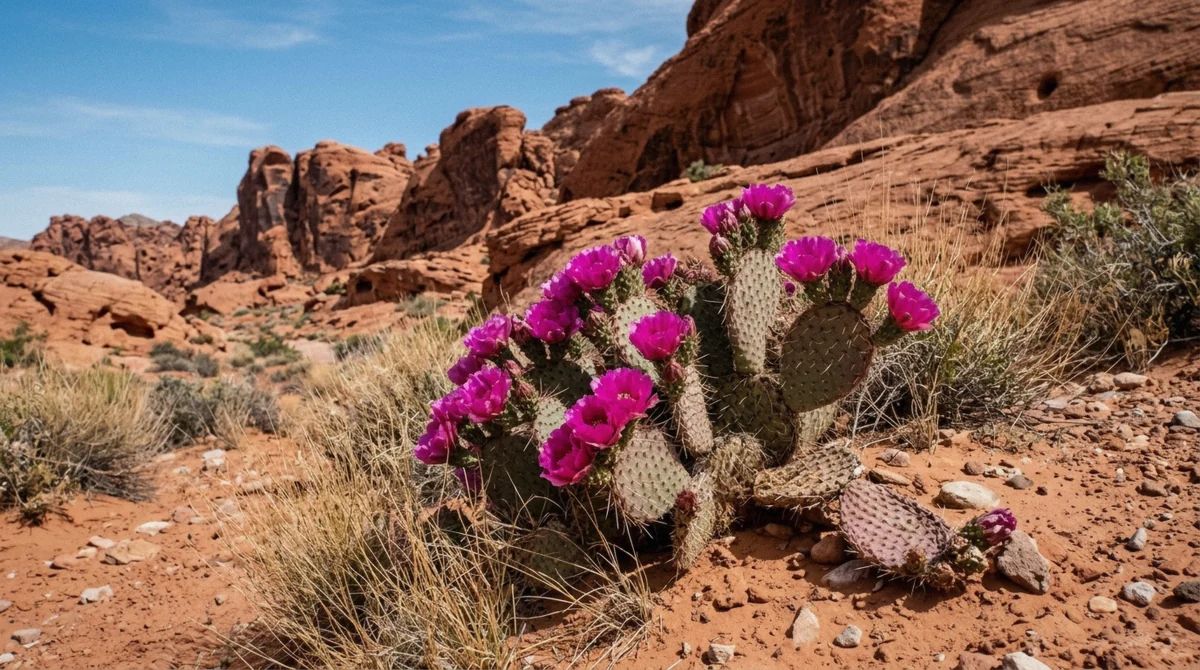
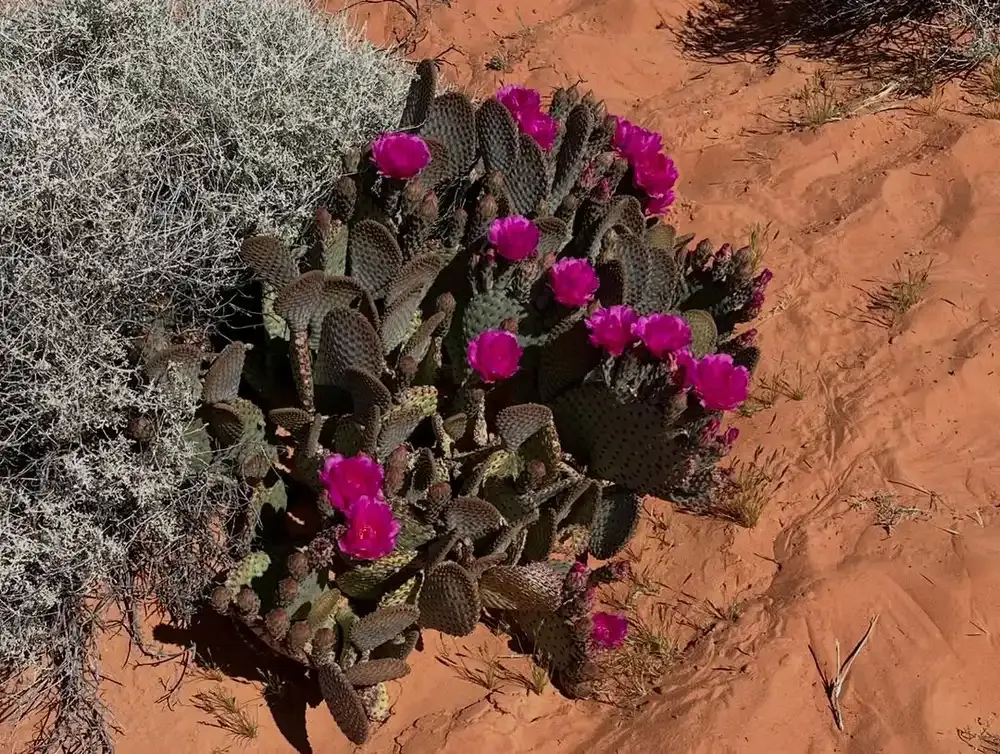
Highs climb from 72°F in March to 89°F in May, and the desert is as close to green as it gets. Beavertail cactus flowers magenta through March and April, which is the one time of year the park has colour that is not rock.
The trade-off is company. Spring weekends fill the small car parks at Fire Wave and White Domes by mid-morning, and the guided departures sell out weeks ahead. Book early and start early.
Summer, June to August: driving weather, not walking weather
Averages of 100°F, 105°F and 103°F, with the nine-trail closure in force throughout. Visitor numbers drop sharply, which means empty roads and easy parking, and the park is genuinely beautiful from a car with the air conditioning running.
If you are here in these months, be at the west entrance by 7 a.m., do Mouse's Tank and Elephant Rock, and be out by 11 a.m. August also brings the year's storm risk, when brief downpours can flood washes and close road sections for a day.
Autumn, September to November: the best of the year
September still averages 95°F, but by the time the trails reopen on October 1 the highs have dropped to 82°F, and November settles at 68°F. Light gets lower and warmer through the season, and the crowds thin after the October weekends.
This is the window most photographers pick, and the one where a full day in the park is comfortable from the first stop to the last.
Winter, December to February: cold, quiet, and the sharpest light
Highs of 57°F to 63°F and lows near freezing before dawn. The sun stays low all day, which means the sandstone holds colour from mid-morning to mid-afternoon rather than only at the ends of the day.
Bring layers you can shed by 11 a.m., and remember that sunset arrives before 5 p.m., so a late start wastes the day. Campgrounds are quiet and both stay open.
Best Time of Day
The first and last ninety minutes
Aztec sandstone is pale rock stained by iron oxide. Under a high sun that stain reads flat and orange-grey; under low sun it saturates and the bands separate. The difference between a midday photograph and a golden-hour one at the same spot is not subtle.
Mornings give you cool sand and empty trails. Late afternoons give you the colour. If you can only do one, take the afternoon and accept the warmer walk.
Why midday is the worst of both
It is the hottest ground, the flattest light and the fullest car parks, all at once. In summer it is also when the rock surface reaches temperatures that hurt dogs' paws, which is why the park asks that pets stay on short leads and off open rock in the heat.
The two guided departures that avoid it entirely are the sunrise trip, which is in the park by first light, and the sunset trip, which arrives as temperatures fall and finishes at Rainbow Vista.
Booking Around the Season
What changes with the calendar
No operator suspends tours seasonally; all eight run year-round, and the park itself is open sunrise to sunset every day of the year. Two things do shift with the calendar.
| Season | What changes | What to book |
|---|---|---|
| March to May | Everything open, weekends busy | Any tour, but book two to three weeks ahead |
| June to September | Nine trails closed, extreme heat | Sunset or sunrise departures rather than midday |
| October to November | Trails reopen October 1, light improves | The full-day trip, which finally has time to use |
| December to February | Cold mornings, early sunset | Half-day departures; a full day ends in the dark |
The one time the departure time moves
The sunset tour is the only listing here that changes with the season: it leaves at 1:30 PM in winter and 4:00 PM in summer, and the operator confirms your exact pickup the day before. Travellers who assume a summer start time in January are the ones who miss it.
Everything else runs on a fixed morning schedule year-round. The eight trips are compared on our Valley of Fire tours from Las Vegas page: the sunrise day trip works the cool end of a summer morning, and the $99 half day suits the open-trail months.
What Actually Makes the Rock Look Red
Iron oxide and the angle of the sun
The colour is iron oxide staining pale Aztec sandstone that started as wind-blown dunes about 150 million years ago. The pigment does not change through the year; what changes is how the light hits it.
A high sun lights the rock evenly and flattens it, which is why midday photographs come back looking grey-orange and disappointing. A low sun rakes across the same surface, throws shadow into every groove and cross-bed, and separates the red bands from the cream ones. That is a geometry effect, not a seasonal one, which is why a January noon and a July noon both disappoint and a January evening and a July evening both deliver.
Why winter looks better than the temperature suggests
Between December and February the sun never climbs as high, so the raking angle that photographers chase at sunset in June is available for much of a winter afternoon. Dry winter air also carries less haze than the spring wind season, when dust off the Mojave softens distant ridgelines.
The practical upshot: a cold, quiet December weekday delivers better light for more hours than a perfect April Saturday, and you will have the car parks to yourself.
Questions About Timing a Visit
What is the best month to visit Valley of Fire?
April or October. Both average highs in the high 70s to low 80s Fahrenheit, both have every trail open, and both give low enough sun for the rock to hold colour. March and November are close behind, with November the quieter of the two.
What is the best time of day to visit Valley of Fire?
The last ninety minutes before sunset for colour, or the first ninety after sunrise for cool sand and empty trails. Midday delivers the flattest light, the hottest ground and the fullest car parks.
Is Valley of Fire too hot in summer?
For walking, yes. June through August average 100°F or more, and nine trails including Fire Wave are closed from May 15 to September 30 after repeated heat rescues. The scenic drive and the roadside stops still work if you go early and carry water.
When do the trails reopen?
October 1. The closure runs from May 15 through September 30 every year, and it covers Fire Wave, White Domes, the Seven Wonders Loop, Pinnacles, Prospect, Arrowhead, Natural Arch and Charlie's Spring.
Does it rain much at Valley of Fire?
Very little. February is the wettest month at about 0.83 inches and June the driest at 0.05 inches. What matters is not the total but the form: summer storms arrive fast, flood washes and can close road sections for a day.
How cold does it get in winter?
Lows average 39°F to 43°F from December to February, with highs of 57°F to 63°F. Pre-dawn departures in those months are genuinely cold, and the desert warms quickly once the sun is up, so layers matter more than a heavy coat.
If your dates are flexible, take the first week of November: warm days, open trails, low sun and the spring crowds six months away.